
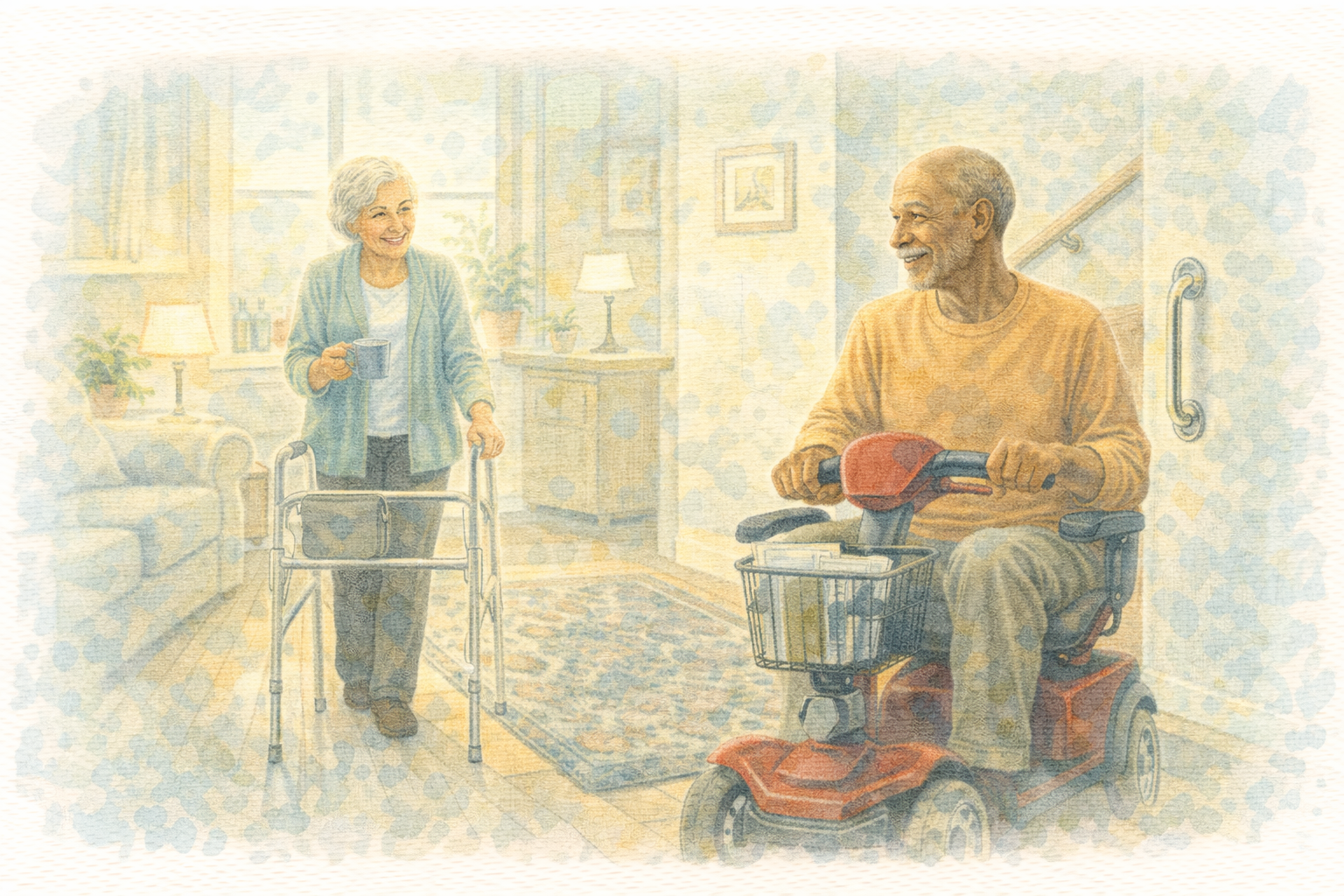
Supported Independent Living (SIL) and Specialist Disability Accommodation (SDA) are often discussed together, but they are not the same thing. SIL is about the daily support a person needs, while SDA is about the specialist housing design or environment a person may need because of very high support needs or extreme functional impairment.
An OT report can help explain a participant’s functional capacity, daily support needs, risks, home environment, and whether their current living arrangement is suitable. This can support NDIS home and living decisions, including SIL, SDA, ILO, or other support options.
For support coordinators, families, and providers, the main question is usually not just “SIL or SDA?” The better question is: what evidence does the NDIS need to understand the person’s support needs and housing barriers?
What is SIL?
Supported Independent Living, or SIL, refers to the support a participant may need to live as independently as possible. This may include help with personal care, meal preparation, household tasks, routines, medication prompts, overnight support, behaviour support, and community access.
SIL is usually about the support workers and support model around the person. It may be delivered in shared living, individual living, or another home and living arrangement, depending on the person’s goals and support needs.
A SIL-related OT report may help clarify:
- what daily activities the person can do independently;
- where they need prompting, supervision, physical assistance, or full support;
- whether support is needed during the day, evening, or overnight;
- whether the person can safely share supports with others;
- risks linked to self-care, mobility, cognition, behaviour, medication, meals, or community access;
- what supports may help the person build independence over time.
What is SDA?
Specialist Disability Accommodation, or SDA, is different. SDA relates to the physical home or housing design. It is generally considered for NDIS participants with very high support needs or extreme functional impairment who require a specialist housing response.
The National Disability Services overview explains that SDA is the “bricks and mortar” component of disability accommodation supports and is separate from the personal support a participant receives in the home. SDA is for housing, while supports such as SIL are delivered separately in or around that housing: Specialist Disability Accommodation, NDS.
An SDA-related OT report may help explain:
- why mainstream housing may not meet the person’s disability-related needs;
- what physical access barriers exist in the current home;
- whether the person requires accessible design features, assistive technology, hoist access, improved liveability, robust design, or high physical support features;
- the risks of remaining in unsuitable housing;
- how a specialist housing response may improve safety, independence, care sustainability, and long-term outcomes.
SIL vs SDA: simple difference
| Question | SIL | SDA |
|---|---|---|
| What does it relate to? | Daily support workers and support model | Specialist housing or physical environment |
| What does it help with? | Personal care, meals, routines, supervision, overnight support, daily living tasks | Accessibility, safety, specialist design, environmental barriers, housing suitability |
| Can they work together? | Yes. A person may need SIL support inside an SDA property. | Yes. SDA can provide the home, while SIL provides the support. |
| What does an OT assess? | Functional capacity, support needs, risks, routines, independence, support ratios | Functional impact, housing barriers, access needs, safety, environmental suitability |
Need an OT report for SIL or SDA evidence?
Youcentric Care Group provides mobile OT assessments and clear reports for NDIS participants, families, support coordinators, and providers.
When does the NDIS need an OT report?
An OT report may be helpful when the participant’s current living arrangement is no longer safe, sustainable, or suitable. It may also be needed when a support coordinator, family, provider, or planner needs evidence about functional capacity, daily support needs, risks, and housing barriers.
The NDIS Home and Living Supporting Evidence Form is used when a person has new or changed home and living support needs, including requests involving SDA, SIL, or other living options. The form asks for information about daily support needs, health and medical needs, current circumstances, barriers, risks, strengths, and ongoing requirements: NDIS Home and Living Supporting Evidence Form guide.
A strong OT report can support this process by explaining the person’s function in practical daily life. This is especially important when the person has complex needs, high support requirements, behaviour or psychosocial risks, mobility issues, carer stress, unsafe housing, or repeated breakdowns in previous living arrangements.
What should a SIL or SDA OT report include?
The exact report depends on the person’s goals and circumstances, but a useful OT report may include:
- participant background, including diagnosis, current living situation, supports, goals, and funding context;
- functional capacity across self-care, domestic tasks, mobility, communication, cognition, emotional regulation, and community access;
- support needs, including prompting, supervision, physical assistance, overnight needs, informal support, and risk management;
- home environment, including access barriers, bathroom safety, bedroom setup, transfers, equipment use, and environmental risks;
- assistive technology and home modifications that may reduce risk or improve independence;
- housing suitability, including whether the current home is safe, sustainable, and aligned with the participant’s needs;
- recommendations linked to the participant’s goals, functional needs, and reasonable next steps.
When might SIL evidence be needed?
SIL evidence may be needed when a participant requires regular support with daily living tasks and informal supports are no longer enough. This could include support with showering, dressing, meals, cleaning, medication routines, behaviour support, community access, or overnight safety.
An OT can help describe what the person can do independently, what they can do with prompting, and what they cannot safely do without assistance. This helps referrers understand the person’s practical support needs rather than relying only on diagnosis.
When might SDA evidence be needed?
SDA evidence may be needed when the issue is not only support worker assistance, but the physical home itself. For example, a person may be unsafe in a standard bathroom, unable to access bedrooms or entries, unable to use equipment safely in the current home, or at risk because the home cannot support their mobility, sensory, behavioural, or personal care needs.
SDA is not for everyone. The evidence usually needs to show why mainstream housing, ordinary home modifications, informal supports, or standard support services are not enough to meet the person’s disability-related needs.
How support coordinators can make a clean referral
A clean referral helps the OT complete the right assessment and write the right report. Before referring, try to include:
- the participant’s NDIS goals and current plan dates;
- why the report is needed now;
- current living situation and who the participant lives with;
- current paid and informal supports;
- main safety concerns or breakdown risks;
- any previous FCA, behaviour support plan, therapy reports, hospital discharge summaries, or equipment reports;
- whether the request relates to SIL, SDA, ILO, AT, home modifications, or a plan review.
This allows the OT to focus the assessment on the evidence that matters most. It also reduces back-and-forth after the visit and helps the report address the funding or housing question clearly.
Mobile OT assessments for SIL and SDA reports
Youcentric Care Group provides mobile occupational therapy assessments across Sydney and Western Sydney. Our OTs assess the person in their real environment, which helps identify practical barriers, risks, routines, equipment needs, housing issues, and support requirements.
For participants in areas such as Mount Druitt, Blacktown, Liverpool, Fairfield, Bankstown, Merrylands and Parramatta, this can be especially useful where the person’s home environment, family supports, housing stock, or service access issues are directly affecting their daily function.
Need a SIL or SDA OT report?
If you need an OT assessment for SIL, SDA, Functional Capacity, Assistive Technology, or home and living evidence, Youcentric Care Group can help with mobile assessment and clear report recommendations.
Need an OT report near you?
Whichever report you need, the method behind it is the same. Read our full assessment methodology, including the evidence standard every recommendation is written to.