
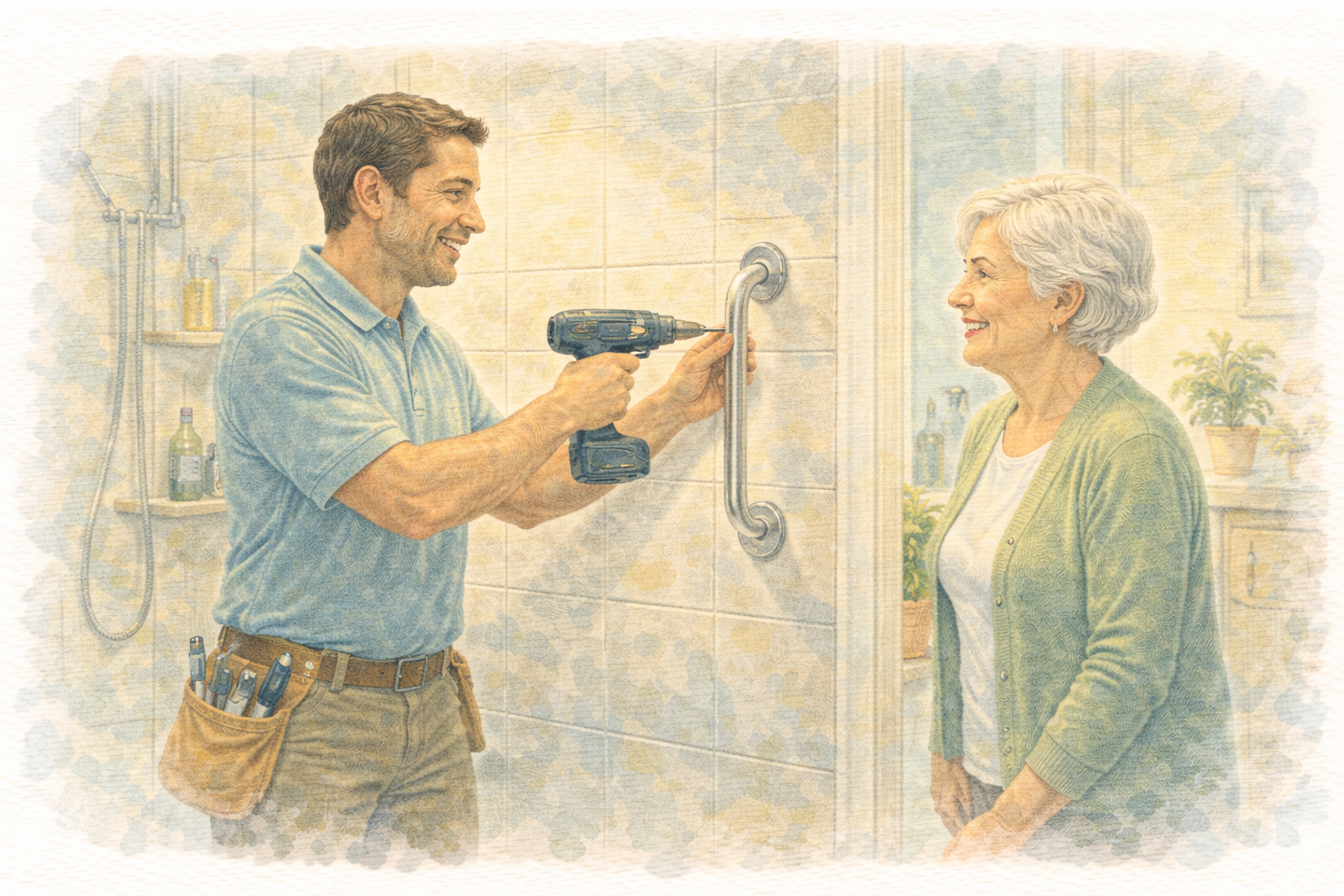
NDIS minor home modifications can make a big difference when someone is struggling to move safely around their home, use the bathroom, complete daily tasks, or manage falls risk. For many participants, the issue is not that they need a major renovation. They may need the right grab rail, handrail, threshold ramp, shower change, toilet support, or access adjustment in the right location.
This guide explains what NDIS minor home modifications are, when an occupational therapy report may be needed, and what information helps make the referral process easier.
Quick takeaway
A minor home modification is not just about installing equipment. The OT needs to show why the change is needed, how it supports function and safety, and why the recommendation matches the person’s home, goals and disability-related needs.
What are NDIS minor home modifications?
The NDIS describes home modifications as changes to a person’s home that help them manage their disability. These changes may help the person safely access the home, move around the home, and complete daily tasks more easily.
Minor home modifications are usually smaller changes compared with major structural renovations. They may still require proper assessment, measurements, photos, trades input and a written OT recommendation, especially if the participant needs funding approval or the modification has safety implications.
Examples can include grab rails, handrails, threshold ramps, handheld shower hoses, non-slip changes, small access changes, toilet transfer supports, shower access adjustments or other practical changes that improve safety and independence at home.
When might an OT report be needed?
An OT report may be needed when the home modification is linked to disability-related needs, falls risk, personal care, transfers, mobility, carer safety, or NDIS funding. The report helps explain the functional problem and why the recommended modification is reasonable for the person’s situation.
A report is especially useful when the request involves more than a simple private installation. For example, a participant may need evidence showing why a rail needs to be placed in a specific location, why a threshold ramp is required for safe access, or why bathroom changes are needed to support showering and toileting.
Common minor home modification referral reasons
- Bathroom safety: falls risk, slippery surfaces, unsafe shower entry, difficulty standing to wash or difficulty using a shower chair.
- Toilet transfers: difficulty sitting down, standing up, reaching supports, or completing toileting safely.
- Grab rails and handrails: need for fixed support points in bathrooms, hallways, entries, steps or outdoor access areas.
- Thresholds and steps: difficulty entering the home, moving through doorways, or managing small level changes with a walking aid or wheelchair.
- Carer safety: unsafe manual handling, awkward bathroom layout, or increased physical assistance required from family or support workers.
- Falls prevention: recent falls, near misses, reduced balance, fatigue, weakness, low vision or changed mobility.
Need a minor home modification assessment?
Youcentric Care Group provides mobile OT home modification and safety assessments across Sydney and Western Sydney, including grab rail recommendations, bathroom safety reviews, access assessments and NDIS reporting where required.
What does the OT assess?
A good home modification assessment looks at the person, the task, and the environment together. The OT is not only looking at the wall, doorway or bathroom. They are looking at how the person actually uses the space.
- Functional needs: mobility, transfers, balance, fatigue, pain, strength, vision, cognition and falls history.
- Daily tasks: showering, toileting, dressing, entering the home, moving between rooms and using mobility aids.
- Home layout: bathroom setup, toilet position, doorways, steps, floor surfaces, circulation space and lighting.
- Existing supports: current rails, shower chairs, walking aids, wheelchairs, carers, family supports and routines.
- Risks: falls, poor access, unsafe transfers, carer strain, equipment mismatch or worsening independence.
- Funding pathway: NDIS, aged care, private funding, insurance or another referral source.
What evidence can support the recommendation?
The exact evidence depends on the person and the funding pathway. For NDIS-related requests, the OT report should usually make the connection between the person’s disability, their functional difficulty, the risks in the home, and the expected benefit of the modification.
Useful evidence may include:
- Photos of the bathroom, toilet, entry, steps, shower or area of concern
- Measurements of doorways, thresholds, circulation space, fixtures and transfer areas
- Observation of the person completing the task or attempting the transfer
- Falls history, near misses, carer concerns or incident details
- Details of current equipment and why it is not enough on its own
- Explanation of why the proposed modification is suitable for the person and the home
- Quotes or trades input where required
Minor home modification examples
Grab rails
Grab rails may be recommended beside a toilet, in a shower, near a doorway, at an entry point or wherever fixed support is needed. The type, height, angle and location should match the person’s transfer method and the wall structure.
Handrails
Handrails may be needed along steps, ramps, outdoor paths or internal areas where continuous support improves access and safety. They are often important when someone has reduced balance, fatigue, pain or mobility aid use.
Threshold ramps
Threshold ramps can help where a small lip or level change makes access unsafe. They may support people using walkers, wheelchairs, scooters or those at risk of tripping.
Bathroom safety changes
Bathroom changes may include rails, shower seating, handheld shower hoses, toilet supports, non-slip surfaces or layout changes. Bathrooms are high-risk areas because transfers, wet surfaces and personal care tasks often happen together.
What should a clean referral include?
A clean referral helps the OT decide what type of assessment and report is needed. It also reduces back-and-forth with the participant, support coordinator, plan manager or family.
- Participant name, address and best contact person
- Funding source, such as NDIS, Home Care Package, CHSP, private or insurance
- Main issue, such as shower access, toilet transfers, steps, falls risk or carer safety
- Whether the person uses a walking aid, wheelchair, shower chair, commode or hoist
- Any recent falls, near misses, hospital admissions or mobility changes
- Photos of the area if available
- Whether an OT report, recommendation letter, quote or scope of works is required
Areas we support
Youcentric Care Group provides mobile OT minor home modification and home safety assessments across Sydney and Western Sydney. We can assess the person in their actual home environment and provide practical recommendations based on their daily routine, risks and support needs.
Need an OT report for minor home modifications?
Send us the referral details and we can advise whether the person needs a home safety review, minor home modification assessment, or a more detailed OT report for funding.
Accuracy note
This article is general information only. Home modification recommendations should be based on the person’s functional needs, the home environment, funding requirements and advice from appropriate installers or tradespeople. For broader information, see the NDIS home modifications guideline.