
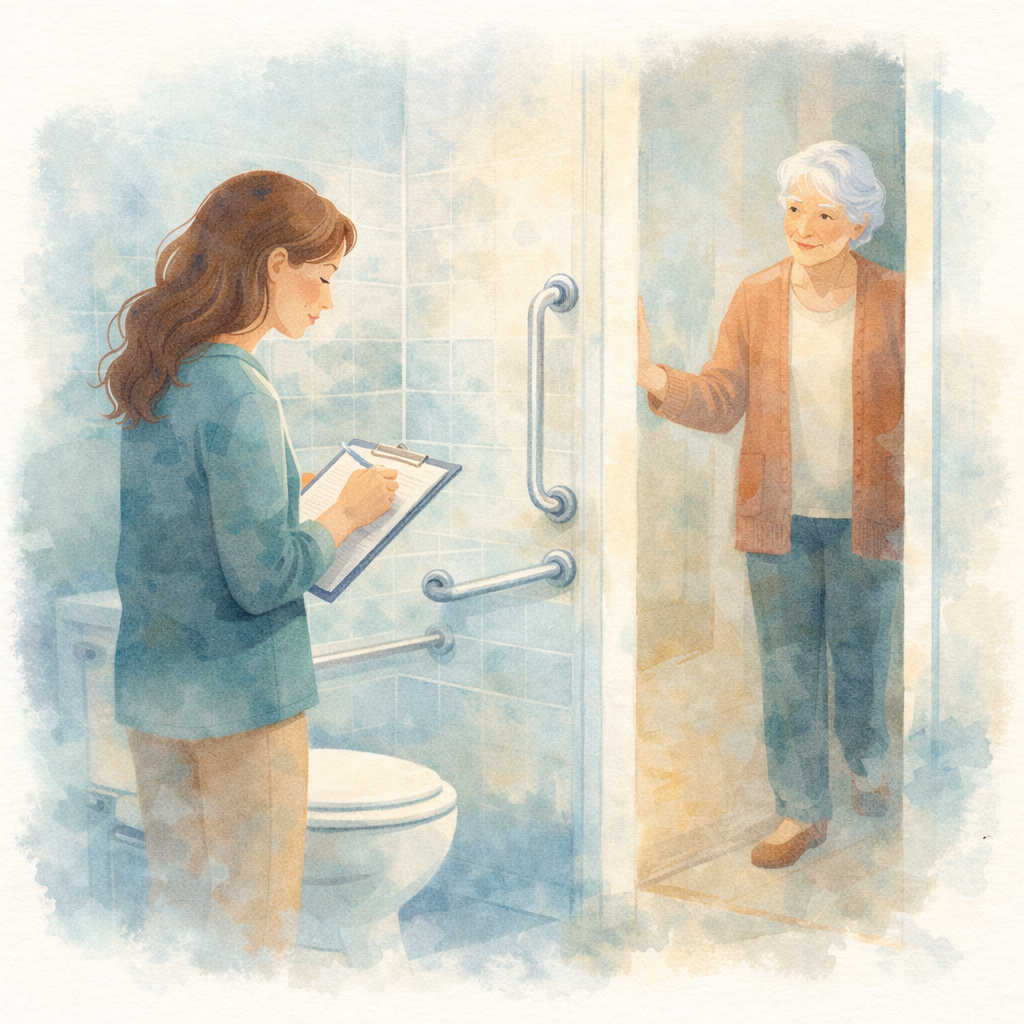
An aged care OT assessment looks at how an older person is managing at home, what is becoming harder, and what practical supports may help them stay safe, independent and confident for longer.
The occupational therapist does not only look at one issue, such as a shower chair or grab rail. A good assessment looks at the person, their daily routine, the home environment, falls risk, equipment needs, carer support and the tasks that matter most to them.
Quick takeaway
An aged care OT assessment helps identify what is making daily life harder at home and what changes may reduce risk. This can include equipment, home safety changes, falls prevention strategies, personal care supports, routine planning, and referrals for further services where needed.
What does an aged care OT assessment look at?
The OT will usually build a picture of how the person moves through their day. This may include how they get out of bed, shower, dress, prepare meals, use the toilet, walk around the home, manage steps, complete household tasks and stay connected to their usual activities.
Moving around safely
The OT may look at walking, transfers, balance, fatigue, pain, mobility aids, steps, ramps and how safely the person moves between rooms.
Reducing avoidable hazards
The assessment may consider recent falls, near misses, floor surfaces, rugs, lighting, footwear, clutter, bathroom safety and outdoor access.
Showering, dressing and toileting
The OT may assess shower entry, toilet transfers, dressing routines, continence-related needs, fatigue, privacy, dignity and carer assistance.
Choosing the right supports
Recommendations may include shower chairs, over-toilet aids, bed rails, transfer aids, mobility aids, pressure care items or small daily living equipment.
Making the home easier to use
The OT may review bathroom layout, doorways, thresholds, kitchen access, chair height, bed height, entry points and high-risk areas of the home.
Helping carers and referrers plan
The assessment can clarify where the person is independent, where supervision may be needed, and what information helps providers plan safe support.
When might someone need an aged care OT assessment?
An assessment may be helpful when an older person is starting to find everyday tasks harder, has had a fall, is returning home from hospital, needs equipment, or wants to remain at home but the current setup no longer feels safe.
- Falls or near misses: especially in the bathroom, bedroom, hallway, stairs or outdoor entry areas.
- Showering concerns: difficulty stepping into the shower, standing to wash, drying safely or using a shower chair.
- Toilet transfer difficulty: struggling to sit, stand, balance, clean or manage clothing safely.
- Reduced mobility: slower walking, increased fatigue, pain, fear of falling or changed use of walking aids.
- Hospital discharge: needing equipment, home changes or safer routines after illness, injury or surgery.
- Carer concerns: family, support workers or providers noticing increased risk or more assistance being required.
Need an aged care OT assessment?
Youcentric Care Group provides mobile aged care OT assessments across Sydney and Western Sydney, including falls prevention, home safety reviews, equipment recommendations and practical support planning.
What happens during the visit?
The OT will usually speak with the person and, where appropriate, family members, carers or the referrer. The goal is to understand what the person wants to keep doing, what feels unsafe, and what has changed recently.
The assessment may include observation of real daily tasks. For example, the OT may ask the person to show how they get out of a chair, walk to the bathroom, step into the shower, use the toilet, get in and out of bed, or move through the front entry.
Conversation
The OT asks about goals, routines, health changes, current supports, recent falls, worries at home and what the person wants to improve.
Functional observation
The OT observes relevant tasks such as walking, transfers, shower access, toilet use, meal preparation or getting in and out of bed.
Home safety review
The OT checks the environment, including bathroom setup, pathways, lighting, floor surfaces, furniture height, access points and hazards.
Recommendations
The OT explains practical options, which may include equipment, home changes, routine strategies, referrals or a written summary/report.
What recommendations can come from the assessment?
The recommendation depends on the person’s needs, funding pathway and home environment. Some people only need simple equipment or small changes. Others may need a more detailed report, home modification recommendations, or coordination with aged care providers, family and tradespeople.
- Equipment: shower chair, handheld shower hose, over-toilet aid, toilet surround, bed stick, pressure cushion, reacher or daily living aids.
- Home safety changes: removing trip hazards, improving lighting, changing furniture setup, reviewing flooring or improving access pathways.
- Minor home modifications: grab rails, handrails, threshold ramps, bathroom safety changes or access recommendations.
- Routine strategies: pacing, energy conservation, safer showering routines, task simplification or falls prevention planning.
- Carer guidance: safer assistance methods, supervision needs, equipment setup or when further review may be required.
- Written report: a summary of assessment findings and recommendations for providers, family, funding bodies or referrers.
Aged care funding pathways can affect the report
The level of documentation needed can depend on the funding pathway. Some requests may only need a short recommendation, while others may need a more detailed OT report explaining risks, functional difficulties, clinical reasoning and expected benefits.
| Pathway | What it may mean for the OT assessment |
|---|---|
| Support at Home | May involve assessment information to support equipment, home safety, care planning or ongoing support needs. |
| CHSP | May involve entry-level supports and practical recommendations to help the person remain at home safely. |
| Private or self-funded | May focus on practical recommendations, quick equipment advice, home safety, falls prevention or planning before risk increases. |
| Hospital discharge or GP referral | May focus on safe return home, equipment needs, short-term risks, mobility changes and urgent home setup concerns. |
What should a clean referral include?
A clear referral helps the OT triage the request and prepare for the visit. It also reduces back-and-forth between the older person, family, aged care provider, GP, support service or referrer.
- Person’s details: name, address, contact person and best time to call.
- Funding pathway: Support at Home, CHSP, private, Medicare, insurer or other pathway if known.
- Main concern: falls, showering, toilet transfers, equipment, mobility, home access or hospital discharge.
- Current supports: family help, support workers, aged care provider, GP, allied health or nursing involvement.
- Equipment already used: walking aid, shower chair, rails, bed equipment, wheelchair, continence aids or other supports.
- Recent changes: falls, hospital admission, surgery, decline in mobility, new diagnosis, increased confusion or increased fatigue.
- Photos if available: bathroom, toilet, front entry, steps, bedroom, chair setup or area of concern.
- Report need: whether a written report, equipment recommendation, home modification advice or provider summary is required.
Areas we support
Youcentric Care Group provides mobile aged care occupational therapy across Sydney and Western Sydney. We can assess the person in their own home, where daily routines and safety concerns can be seen in context.
Need an aged care OT assessment at home?
Send us the referral details and we can advise whether the person may need a home safety review, falls prevention assessment, equipment recommendation, minor home modification assessment or a more detailed OT report.
Accuracy note
This article is general information only. Aged care OT recommendations should be based on the person’s functional needs, home environment, funding pathway, safety risks and goals. For broader information about help at home and aged care assessment pathways, see My Aged Care help at home, the Australian Government Support at Home information, and the Commonwealth Home Support Program information.