
If you have support coordination in your NDIS plan, or you are wondering whether you need it, it helps to understand the three levels and what each one costs. This guide explains support coordination in plain English, with the confirmed 2026-27 prices and the changes worth knowing about.
The figures below are general information. Your own plan decides what you can claim, so check the current NDIS Pricing Schedule and speak to your planner about your situation.
What is support coordination?
A support coordinator helps you make sense of your NDIS plan and put it into action. That can mean connecting you with the right providers, helping you understand your budget, and coordinating the different supports in your life so they work together.
Support coordination is a Capacity Building support, which means its goal is to build your skills and confidence to manage your own supports over time, not just to organise them for you.
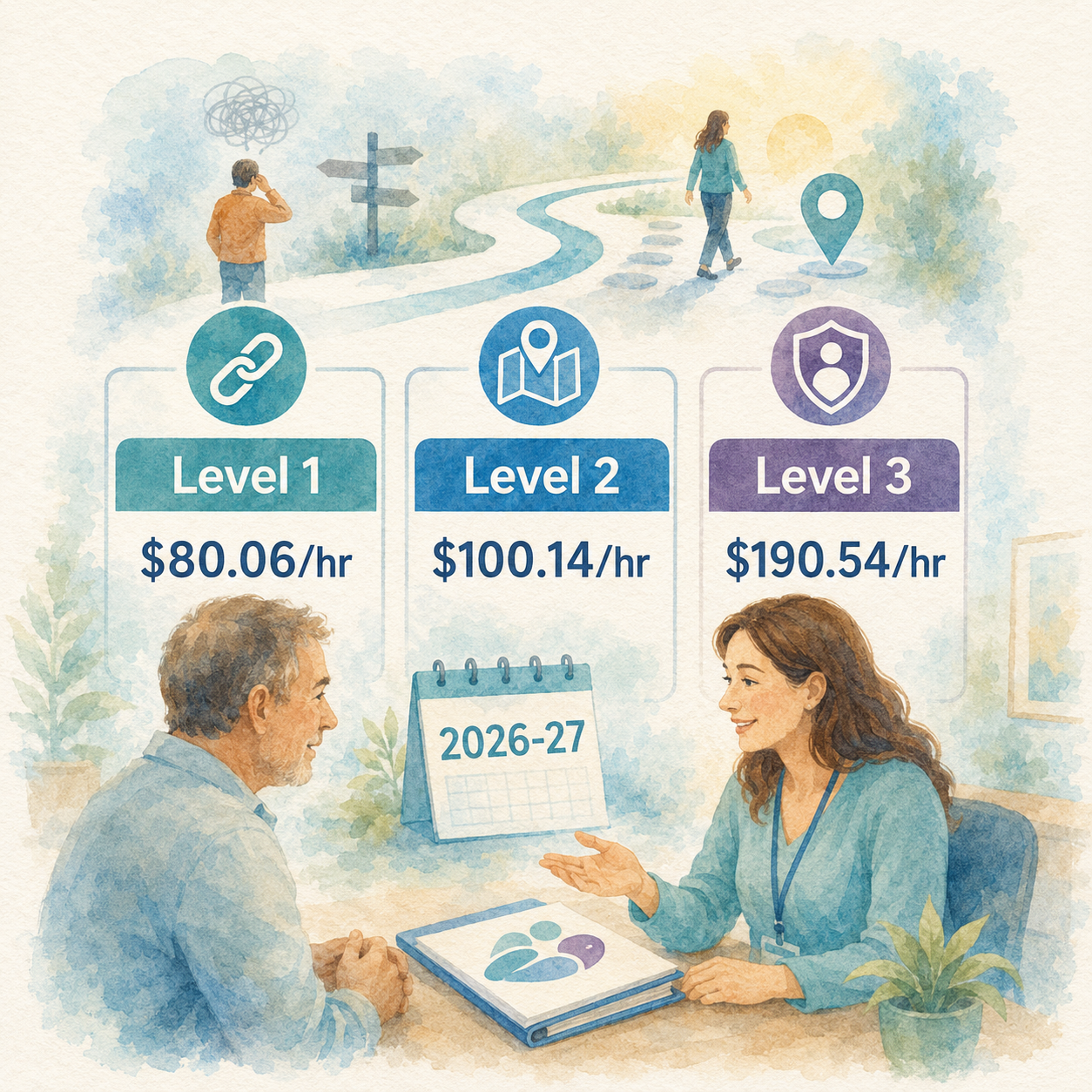
The three levels of support coordination (2026-27 costs)
Support coordination is delivered at three levels, each with a different hourly price that reflects how complex the support is. The confirmed 2026-27 rates are national maximums.
Level 1 – Support Connection ($80.06 per hour)
The entry level. Support Connection is about building your ability to connect with informal, community and funded supports, so you can get more out of your plan independently. It suits people who are newer to the NDIS or need a lighter touch.
Level 2 – Coordination of Supports ($100.14 per hour)
The most common level. This goes beyond basic connection to actively design, build and maintain your support network. The focus is on helping you direct your own life and services. Most participants who have support coordination receive this level.
Level 3 – Specialist Support Coordination ($190.54 per hour)
The highest level, for complex or higher-risk situations, including clinical or behavioural support needs. It is delivered by experienced coordinators with specialist knowledge.
Remember, these are maximum prices, not a bill you pay yourself. If support coordination is funded in your plan, it is generally paid from your plan budget.
How support coordination is funded
Support coordination is claimed from the Capacity Building part of your plan, and it is usually a specific allocation, separate from your therapy or daily-support budgets. Whether you have it, and at what level, is decided when your plan is built.
If you are not sure whether support coordination is in your plan, your NDIS planner or Local Area Coordinator can confirm it.
What changed for support coordination in 2026-27?
For most participants, the headline is that not much changed.
- Level 2 and Level 3 prices did not change. They have now held steady for several years, even as wages and running costs have risen. That long freeze is a real-terms reduction for providers.
- Level 1 (Support Connection) was indexed. Because its price is linked to the support worker cost model, it moved in line with the latest Fair Work wage decision.
This is part of the wider set of changes that took effect on 1 July 2026. For the full picture across therapy, support workers, plan management and more, see our guide to the 2026-27 NDIS pricing changes.
What’s coming: the move to Navigators
Looking further ahead, the NDIS Review recommended eventually replacing support coordinators with a new role called Navigators. This is a significant structural change, but it is still being designed and will take years to roll out. For now, the three levels of support coordination continue as normal.
The NDIA is also running a pilot to collect real data on what support coordination costs to deliver, with a pricing review expected to report in 2027-28. We will update this article as the position becomes clearer.
How support coordinators and OTs work together
Support coordinators and occupational therapists often work side by side. A support coordinator might arrange an OT assessment, then use the OT’s recommendations to help put the right supports in place, for example home modifications, assistive technology, or daily-living support.
If you are a support coordinator arranging an occupational therapy assessment for a participant, our guide on how much an NDIS OT assessment costs explains how OT pricing works in 2026-27.
Frequently asked questions
What are the three levels of NDIS support coordination?
Level 1 (Support Connection, $80.06/hr), Level 2 (Coordination of Supports, $100.14/hr) and Level 3 (Specialist Support Coordination, $190.54/hr). Each reflects a different level of complexity.
Did support coordination prices change in 2026-27?
Level 2 and Level 3 prices did not change. Level 1 was indexed in line with the support worker cost model. The changes took effect on 1 July 2026.
How is support coordination funded?
It is a Capacity Building support, usually allocated as a specific amount in your plan. Whether you have it, and at what level, is decided when your plan is built. Confirm with your planner.
Are support coordinators being replaced?
The NDIS Review recommended eventually replacing them with a new “Navigator” role, but this is still being designed and will take years. The three levels continue as normal for now.