
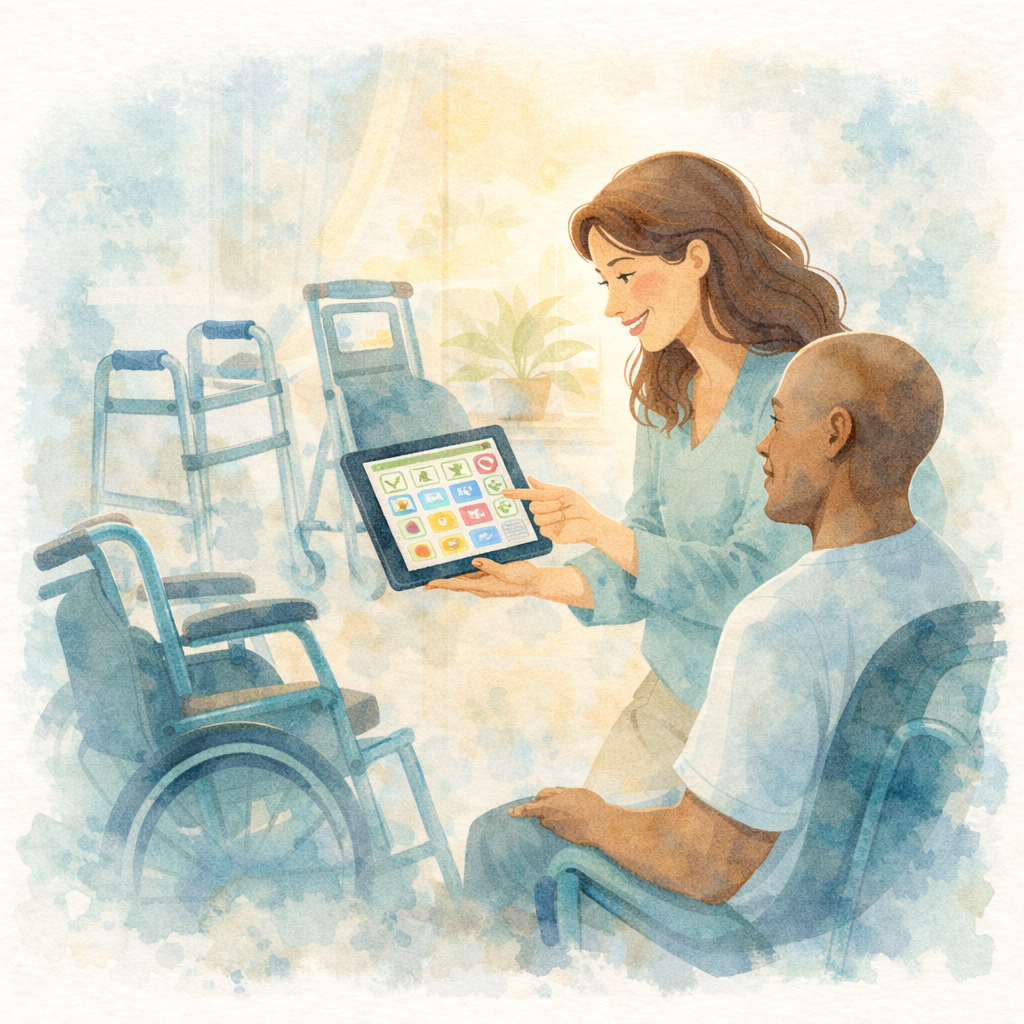
Assistive technology can help a person do everyday tasks more safely, easily and independently. For NDIS participants, older people, families and referrers in Western Sydney, the right equipment can make a practical difference at home, in the community, at work or during personal care routines.
Assistive technology is not only complex equipment. It may include simple daily living aids, bathroom equipment, mobility supports, pressure care items, seating, transfer aids, communication supports or more specialised equipment that needs assessment, trial and training.
Quick takeaway
An OT assistive technology assessment helps match the person, task and environment with equipment that is safe, practical and linked to the person’s goals. For NDIS requests, the level of evidence may depend on the cost, risk and complexity of the item.
What is assistive technology?
The NDIS explains assistive technology as equipment or devices that help a person do things they cannot do because of their disability, or help them do things more easily or safely. This can include low risk everyday items as well as higher risk equipment that requires professional advice, setup or training.
In practice, assistive technology should be selected for a real daily problem. The question is not only “what item does the person need?” The better question is “what task is difficult, why is it difficult, where is it happening, and what support would make it safer or easier?”
Making routines easier
This may include kitchen aids, dressing aids, reachers, adaptive utensils, shower equipment or small supports that reduce strain during daily tasks.
Moving around safely
Mobility-related AT may include walking aids, wheelchairs, transfer aids, ramps, seating supports or equipment that helps a person move with less risk.
Reducing falls risk
Examples may include shower chairs, over-toilet aids, handheld shower hoses, non-slip solutions, rails or other supports used during showering and toileting.
Getting the setup right
Some equipment may need assessment, trial, measurements, pressure care review, manual handling input, training or supplier quotes before a recommendation is made.
When might someone need an OT assistive technology assessment?
An OT assessment may be helpful when a person is having difficulty completing daily tasks, has had a fall or near miss, is using equipment that no longer suits them, or needs evidence to support an NDIS assistive technology request.
- Falls or near misses: especially in the bathroom, bedroom, entry area, stairs, kitchen or outdoor pathways.
- Showering or toileting difficulty: trouble transferring, standing, sitting, reaching, balancing, washing or managing clothing safely.
- Reduced mobility: changed walking, fatigue, pain, fear of falling, difficulty using steps, or increased reliance on family or support workers.
- Equipment mismatch: equipment that is too high, too low, unstable, uncomfortable, unsafe, poorly fitted or no longer suitable.
- Carer concerns: family or support workers noticing increased manual handling risk, strain or supervision needs.
- NDIS evidence needs: when a planner, support coordinator or provider needs clinical reasoning, functional observations, trials or recommendations.
Need an assistive technology assessment?
Youcentric Care Group provides mobile OT assistive technology assessments across Western Sydney, including equipment recommendations, functional observations, trials where appropriate, and practical reporting for participants, families and referrers.
What does the OT look at?
A good assistive technology recommendation should be based on the person’s goals, functional needs and environment. The OT will usually look at the task itself, where the task happens, what has changed, what supports are already being used, and whether a different setup may reduce risk.
Functional needs
The OT considers mobility, strength, balance, pain, fatigue, vision, cognition, sensation, pressure risk, communication and daily routines.
What is difficult?
The assessment may include showering, toileting, dressing, transfers, meal preparation, mobility, community access or work and study routines.
Where is it happening?
The OT reviews bathroom layout, doorway widths, floor surfaces, steps, furniture heights, lighting, access points and space for equipment use.
Who needs to use it?
The recommendation may need to account for the participant, family, support workers, carers, providers, supplier instructions and training needs.
Low risk, mid cost and high cost AT can need different evidence
The NDIS has different processes depending on the cost and risk of the assistive technology. Low cost items are under $1,500 per item, mid cost items are between $1,500 and $15,000 per item, and high cost items are over $15,000 per item.
The NDIS also considers whether AT is low risk or higher risk. Higher risk AT may be complex, may require professional advice, setup or training, or may have safety implications. This is why an OT assessment can be important before buying or requesting some equipment.
| AT type | What it may mean in practice |
|---|---|
| Low cost or simple AT | May involve basic evidence, advice or a practical recommendation if the item is low risk and easy to use safely. |
| Mid cost AT | May need clearer clinical reasoning, functional observations, cost estimate, product comparison or trial information. |
| Higher risk AT | May require assessment, setup advice, supplier input, training and careful consideration of safety and suitability. |
| High cost AT | For items over $15,000, the NDIS states that an assessment by a professional AT advisor and a quote are required. |
Examples of assistive technology an OT may recommend
The right assistive technology depends on the person’s needs, goals, funding pathway and home environment. Two people may have the same diagnosis but need very different equipment because their routines, risks and homes are different.
- Bathroom equipment: shower chairs, over-toilet aids, toilet surrounds, bath boards, handheld shower hoses or commodes.
- Mobility and transfer supports: walking aids, wheelchairs, transfer boards, bed sticks, bed rails, hoists or ramps where clinically appropriate.
- Daily living aids: reachers, adaptive cutlery, dressing aids, kitchen supports, jar openers, medication supports or task-specific aids.
- Seating and positioning: supportive chairs, cushions, pressure care items, wheelchair seating or postural supports.
- Home access supports: threshold ramps, rails, access equipment or links with home modification recommendations.
- Communication or cognitive supports: visual schedules, reminder systems, adaptive technology or devices that support participation and routine.
What should a good assistive technology referral include?
A clear referral helps the OT understand what is needed and whether the request is urgent, simple, complex or linked to a funding decision. It also reduces delays caused by missing information.
- Person’s details: name, address, contact person, preferred communication method and best time to call.
- Funding pathway: NDIS, aged care, private, insurer, Medicare or other relevant pathway.
- Main concern: what task is difficult, where it happens and what risk has been noticed.
- Current equipment: what the person already uses, what works, what does not work and whether anything has changed.
- Recent changes: falls, hospital admission, surgery, pressure injury risk, new diagnosis, pain, fatigue or decline in mobility.
- Photos if available: bathroom, toilet, bedroom, entry, steps, chair setup or the area where the equipment may be used.
- Outcome needed: equipment advice, trial, written report, NDIS evidence, supplier quote support or training recommendations.
Western Sydney assistive technology assessments
Youcentric Care Group provides mobile occupational therapy across Western Sydney. Seeing the person in their real environment can help the OT understand the practical barriers that may not be obvious from paperwork alone.
Need help with an assistive technology request?
Send us the referral details and we can advise whether the person may need an OT assistive technology assessment, equipment recommendation, functional observation, trial support or a more detailed report.
Accuracy note
This article is general information only. Assistive technology recommendations should be based on the person’s functional needs, goals, environment, funding pathway, safety risks and available evidence. For broader information about NDIS assistive technology, see the NDIS assistive technology explained page.